Prof. Dr. Bethany J. Walker
Principal Investigator
Department of Islamic Studies
Research Unit in Islamic Archaeology
Brühler Str. 7
D-53113 Bonn
Phone: +49 228 73 60237
bwalker@uni-bonn.de
Academic Profile
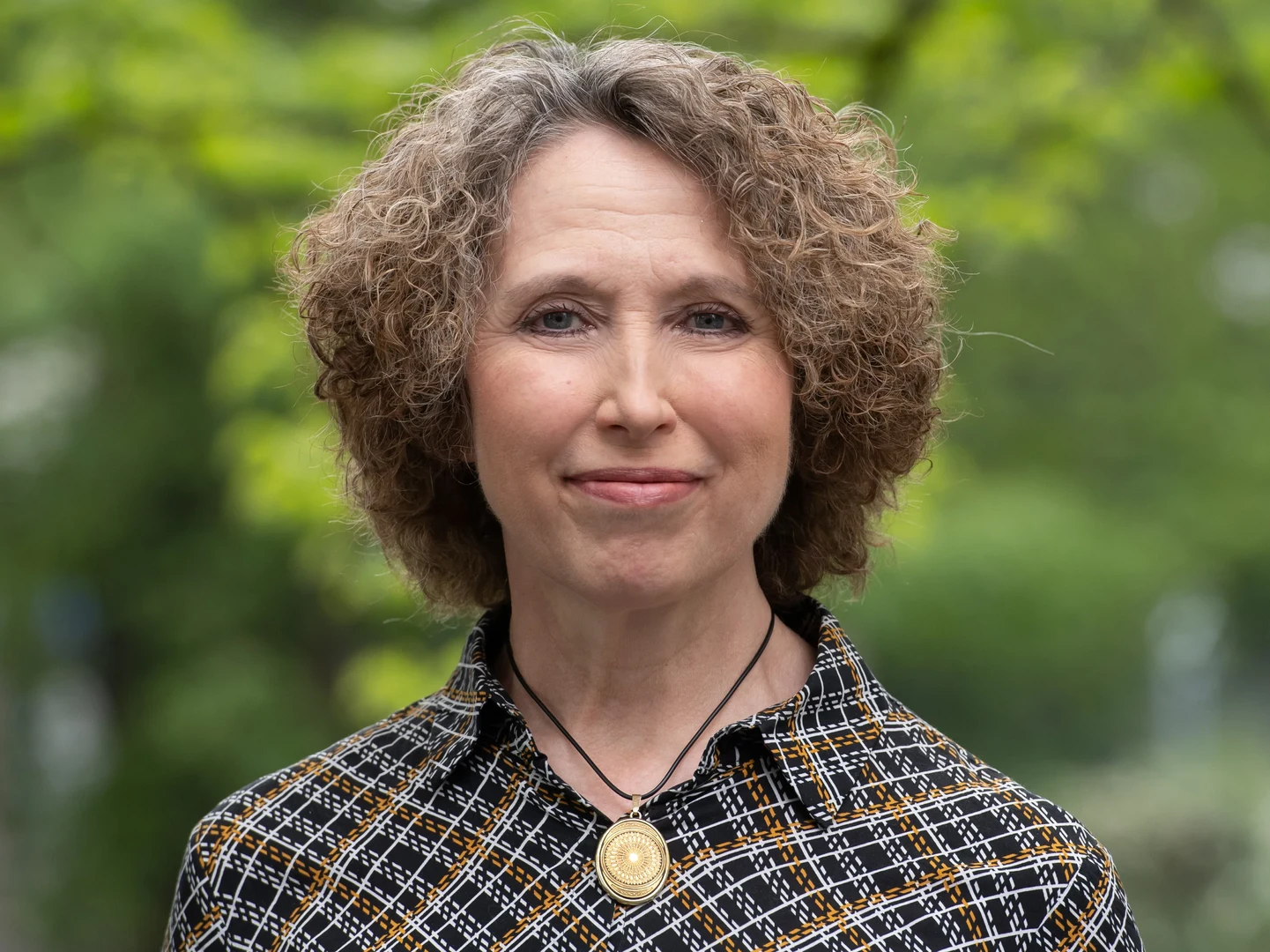
The agency of dependent social groups to negotiate advantages, carve out niches of autonomy and make decisions on a local level that had the potential to impact imperial regimes is at the heart of Bethany Walker’s research. The political focus is the Mamluk Sultanate, a Muslim state founded and maintained by a political elite of manumitted military slaves in Egypt and Syria in the 13th through early 16th centuries. In a system where a particular form of slavery, which has deep roots in the medieval Islamic world, created a ruling elite, peasants, the poor, foreigners, religious minorities and women could redefine their social class to their benefit by molding economic institutions and imperial policies and forming alternative socio-political networks.
1 book, 3 edited volumes, 70 articles, 15 reviews, and more than 60 invited talks, lectures, and presentations; 1 finished and 11 ongoing doctorate supervisions, 2 as external reviewer, numerous B.A. and M.A. theses supervision
Project Phase 2
Tied to the Land? Coercive Labor and Resource Management in Late Medieval and Ottoman Syria
Unlike peasants in Europe, those in the medieval Islamic world were not by legal definition
"tied to the land." They did not belong to the estate, and could not legally be forced to remain
there. However, the realities of practice were quite different, as different kinds of SADs developed between agrarian laborer and estate-owner. Scholarship on peasant society in Mamluk and Ottoman studies has tended to focus on land tenure as the defining factor in this relationship. This view, however, has simplified the complex dynamics that existed in medieval society, and leaves out many agents of coercion and SAD that also came into play.
Rather than conceptualizing the struggle for control over critical resources as a binary conflict between peasants and the state, this project is designed to identify as many factors as possible that influenced decision-making, determined priorities, and defined the SADs that developed, and at times disappeared, between human sources of labor and land owners. The
focus is on holistic behavioral systems, and will use ABMs (agent-based modeling) as a tool
to understand the complex mechanisms behind these relationships. As computer simulations of systems that help to replicate the interactions among people and things, ABM will be an important tool in painting a more detailed picture of peasant SADs over time and across spaces. The data sets for the modeling will come from two main sources: the PI’s archaeological excavations in Israel (funded by the DFG) and Jordan, which are rich in environmental data, as well as medieval Arabic texts related to land use, land tenure, and peasant life.
1992–1998
Ph.D. at the University of Toronto, Canada
1989–1992
M.A. at the University of Arizona, Tucson, Arizona, USA
1985–1989
B.A. at Bryn Mawr College, Bryn Mawr, Pennsylvania, USA
since 2013
Professor for Middle Eastern History, University of Bonn, Germany
2008–2013
Professor and Full Professor for Middle Eastern History, Department of History, Missouri State University, USA
2004–2008
Assistant and Associate Professor for Middle Eastern History, Department of History, Grand Valley State University, USA
1999–2004
Visiting Assistant Professor/Assistant Professor for Middle Eastern History, Department of History, Oklahoma State University, USA
since 2015
Member of the editorial board, "Comparative Islamic Studies"
since 2014
Senior editor, "Journal of Islamic Archaeology"
since 2013
Member of the editorial board, "Bulletin of the American Schools of Oriental Research"
since 2007
Member of the editorial board, "Bulletin d’ Études Orientales"
2005–2008
Research participant in the Norwegian project "Global Moments in the Levant: Towards an Understanding of a Contact Zone between Peoples, Cultures, and States," sponsored by the University of Bergen and funded by the Norwegian Research Council (for $ 2.6 million)
2005–2007
Board of Directors, Middle East Medievalists
since 2004
Member of the editorial board, "Mamluk Studies Review," University of Chicago, USA
2004–2012
Member of editorial board "Near Eastern Archaeology"
since 2014
Co-Director – Khirbet Beit Mazmil Archaeological and Development Project, Jerusalem
since 2003
Senior Director – Northern Jordan Project
2001–2003
Ceramics consultant (medieval and post-medieval) – University of Warsaw – Polis-Pyrgos Archaeological Project, Cyprus
since 1998
Director of Excavations – Excavations at Tall Hisban, Madaba Plains Project, Jordan
1995, 2008
Ceramics consultant (medieval and post-medieval) – Vasilikos Valley Project, Cyprus – directed by Ian Todd and Alison South
1994–1997
Ceramics specialist - Pontifical Institute of Medieval Studies (Toronto, ON) - excavations of medieval Zaraka, Stymphalos, Greece
- Member of advisory board for an Oklahoma university consortium project entitled "al-Sharaka." This project won a $ 15 million, 3-year USAID grant in November 2003 for rebuilding Iraq’s higher education system.
P. E. MacAllister Field Archaeology Award, American Society of Overseas Research (2023)
This career-achievement award honors an archaeologist who, during their career, has made outstanding contributions to ancient Near Eastern and Eastern Mediterranean archaeology. It was awarded to Prof. Walker in 2023 for her decades of leadership in Islamic archaeology and directorship of multiple, long-term field projects in Jordan and Israel.
- 2025. With Alan Farahani, Sofia Laparidou, Silvia Polla, Andreas Springer, Heiko Stukenbrok, Alberto Roncone, and Luana Bontempo. "Kitchen Culture in 13th-Century Syria: A Cookpot in Context at Tall Hisban." Journal of Islamic Archaeology 12(1): 33–76.
- 2025. "Made on Order for the Amir: What was the function of Mamluk 'Barracks Wares'?" In Explorations in Islamic Archaeology: Material Culture, Settlement and Landscapes from the Mediterranean to Western Asia, edited by Joanita Vroom and Hagit Nol, 97–128. Medieval and Post-Medieval Mediterranean Archaeology Series VII. Tournhout: Brepols Publishers.
- 2025. Life on the Farm in Late Medieval Jerusalem: The Village of Beit Mazmil, its occupants and their industry over five centuries. Sheffield: Equinox.
- 2024. "The Politics of Cereal Production in Medieval Syria." In Dependent: Global Perspectives on the History of Resources and Slavery, edited by Martin Bentz, Nikolai Grube, and Patrick Zeidler, 84–89. Bonn: Sandstein Verlag. [Also published in German: 2024. "Getreideanbau und Politik im mittelalterlichen Syrien." In Abhängig: Globale Perspektiven zur Geschichte von Ressourcen und Sklaverei, edited by Martin Bentz, Nikolai Grube, and Patrick Zeidler, 84–89. Bonn: Sandstein Verlag.]
- 2022. "The Changing Face of Agricultural 'Estates' in 15th and 16th-c Palestine: the Commercialization of Khirbet Beit Mazmīl." In The Mamluk-Ottoman Transition: Continuity and Change in Egypt and Bilad al-Sham in the Sixteenth Century, vol. 2, edited by Stephan Conermann and Gül Şen, 325–357. University of Bonn Press.
- 2022. "Echoes of Late Antique Esbus in Mamluk Ḥisbān (Jordan)." In Cities as palimpsests? Erasure, exposure and other responses to the past in eastern Mediterranean urbanism, edited by Beth Clark, Elizabeth Key Fowden, Suna Çağaptay, Edward Zychowicz-Coghill, and Louise Blanke, 103–122. Cambridge: Cambridge University Press.
- 2016. "The Northern Jordan Project and the 'Liquid Landscapes' of Late Islamic Bilad al-Sham." In Landscapes of the Islamic World. Archaeology, History, and Ethnography, edited by Stephen McPhillips and Paul D. Wordsworth, 184–199. Philadelphia: University of Pennsylvania Press.
- 2015. "On Archives and Archaeology. Reassessing Mamluk Rule from Documentary Sources and Jordanian Fieldwork." In Material Evidence and Narrative Sources. Interdisciplinary Studies of the History of the Middle East, edited by Daniella Talmon-Heller and Katia Cytryn-Silverman, 113–143. Leiden: Brill.
- 2014. "Byzantine to Modern Ceramics." In Polis-Pyrgos Archaeological Project. Post-Prehistoric Ceramics and Chalcolithic to Iron Age Ground Stone Artefacts from the Field Survey in Northwestern Cyprus, 1992–1999, edited by Dariusz Maliszewski, 97–37. Warsaw: Creator Publishing House.
- 2014. "Exercising Power on the Mamluk Frontier. The Phenomenon of the Small Rural Citadel, Case of Tall Hisban." In Proceedings of the Eighth International Conference on the Archaeology of the Ancient Near East, 30 April-4 May 2012, University of Warsaw, vol. 3, edited by Piotr Bielínski, Michał Gawlikowski, Rafał Kolínski, Dotora Ławecka, Arkadiusz Sołtysiak, and Zuzunna Wygnańska, 395–408. Wiesbaden: Harrassowitz.
- 2014. "Mobility and Migration in Mamluk Syria. The Dynamism of Villagers 'on the Move.'" In Everything is on the Move. The Mamluk Empire as a Node in (Trans-) Regional Networks, edited by Stephan Conermann, 325–348. Göttingen: V&R unipress.
- 2014. "Planned Villages and Rural Resilience on the Mamluk Frontier. A Preliminary Report on the 2013 Excavation Season at Tall Hisban." In History and Society during the Mamluk Period (1250–1517), edited by Stephan Conermann, 157–192. Göttingen: V&R unipress.
- 2013. "Settlement Decline or Internal Migration? 'Reading' Anew the History of Late Mamluk Jordan." Studies in the History and Archaeology of Jordan 11: 93–104.
- 2013. "What Can Archaeology Contribute to the New Mamlukology? Where Culture Studies and Social Theory Meet." In Ubi sumus? Quo vademus? Mamluk Studies – State of the Art, edited by Stephan Conermann, 311–335. Göttingen: V&R unipress.
- 2011. Jordan in the Late Middle Ages. Transformation of the Mamluk Frontier. Chicago Studies on the Middle East 1. Chicago: Middle East Documentation Center.
- 2009. As editor. Reflections of Empire. Archaeological and Ethnographic Studies on the Pottery of the Ottoman Levant. Annual of the American Schools of Oriental Research 64. Boston: American Schools of Oriental Research.