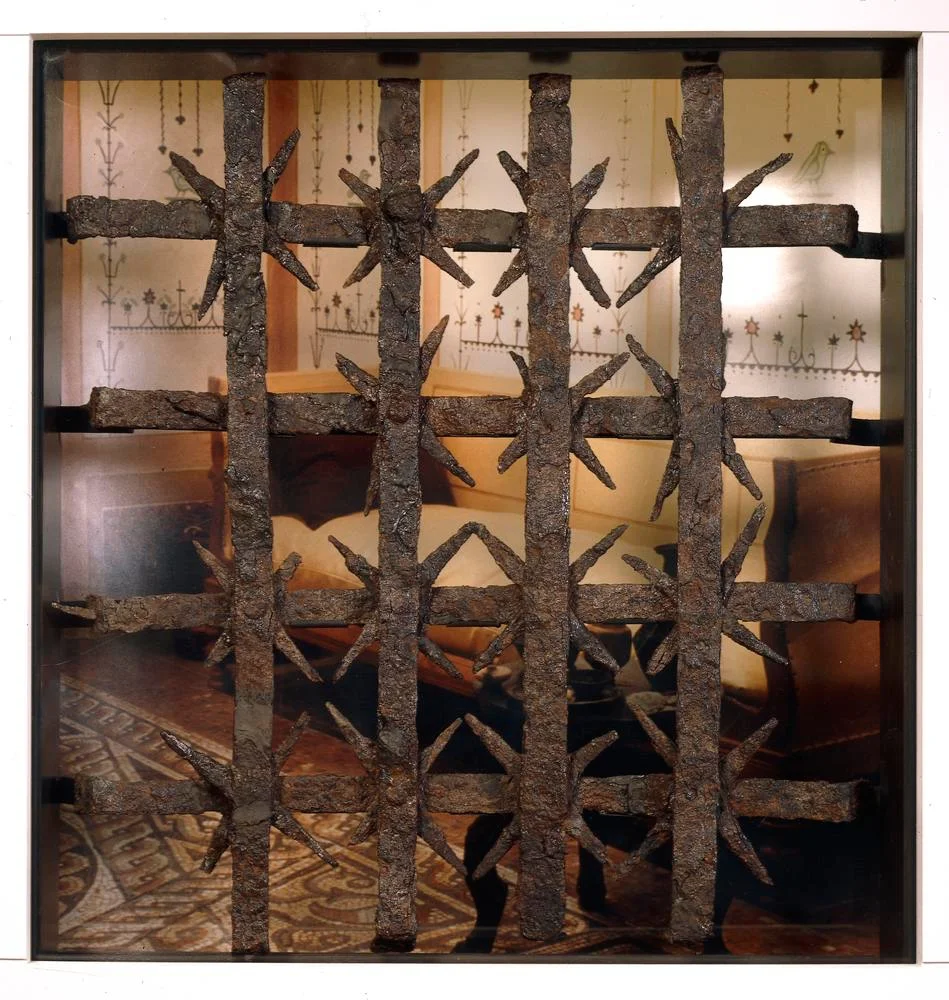
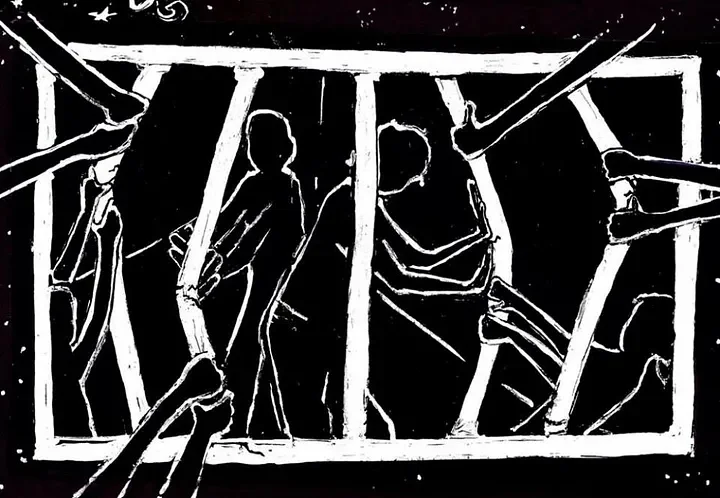
How and why is agency exercised by people living in coercive spaces? To answer this question, the new concept of carceral dependency combines the strengths of the Bonn Center and Wilberforce Institute. Carceral dependency connects the Bonn Center’s focus on Strong Asymmetrical Dependency (SAD) and the Wilberforce Institute’s interest in the physical and social institutions that create the conditions for past and present exploitation of human beings.
One of the aims of carceral dependency is to ‘look ahead by looking back’ (Boris et. al 819). The interplay between the past and the present is of vital importance to the concept and network. By ‘carceral’ we mean systems of control and confinement that operate at physical, social psychological and emotional levels. By ‘dependency’ we mean the concept of strong asymmetrical dependency (SAD) developed by the BCDSS as an analytical tool for explaining relational dynamics where one party holds significant, binding control over another’s actions, resources or mobility, severely limiting the weaker party’s ability to resist, protest or exit (see e.g. Winnebeck et.al. 2023). Aligned with this is the concept of the conducive environment, developed by the Wilberforce Institute that reconceptualises the exploitation of human beings by providing a mid-level model using social bonds theory to explain the prevalence of exploitation (Green et. al 2025).
Carceral dependency should not be interpreted as only systems of punishment or confinement (e.g. prisons or asylums) as it also includes a range of other spaces in which control and confinement can take place (e.g. the household, business, school or community).
References:
Boris, Eileen, Sara M. Butler, and Alex Mireles. “Engendering carcerality: An introduction.” Gender & History 36 (2024): 807–823. https://doi.org/10.1111/1468-0424.12822
Green, Simon T., Alicia Heys,and Craig Barlow, “The Conducive Environment: Reconceptualizing the Exploitation of Human Beings,” The British Journal of Criminology, Volume 66, Issue 3, May 2026, Pages 667–686, https://doi.org/10.1093/bjc/azaf046
Winnebeck, Julia, Ove Sutter, Adrian Hermann, Christoph Antweiler, and Stephan Conermann. "The Analytical Concept of Asymmetrical Dependency". Journal of Global Slavery 8.1 (2023): 1-59. https://doi.org/10.1163/2405836X-00801002


Simon Green
Director of the Wilberforce Institute, University of Hull, Associate Director of the Centre for Violence, Victimisation and Vulnerability, Professor of Criminology and Victimology
Julia Hillner
Professor of Ancient History, University of Bonn, Professor of the Bonn Center for Dependency and Slavery Studies (BCDSS)
Josephine Metcalf
Reader in Criminology & American Studies at the University of Hull, co-director of the Cultures of Incarceration Centre
Pia Wiegmink
Professor of Dependency and Slavery Studies, University of Bonn, Professor of the Bonn Center for Dependency and Slavery Studies (BCDSS)



Alicia Heys
Reader of Modern Slavery at the Wilberforce Institute; Co-Director of the Centre for Violence, Victimisation and Vulnerability; Co-Lead of the Modern Slavery and Human Rights Policy and Evidence Centre
Luvena Kopp
Postdoctoral Researcher and Lecturer, University of Bonn, Professor of the Bonn Center for Dependency and Slavery Studies (BCDSS).
Helen Nichols
Reader in Criminology, PFHEA
School of Criminology, Politics and Law
Placeholder
Placeholder
Placeholder
Placeholder
Placeholder
Green, S., Heys, A. And Barlow, C. (2026) The Conducive Environment: Reconceptualizing the Exploitation of Human Beings, The British Journal of Criminology, Volume 66, Issue 3, May 2026, Pages 667-686, https://doi.org/10.1093/bjc/azaf046
Green, S. (2026). Victimological values, unfairness and remediation: The case for a new type of collective victim right. International Review of Victimology, 0(0). https://doi.org/10.1177/02697580261440954
Hillner, Julia. Prison, Punishment and Penance in Late Antiquity. Cambridge: Cambridge University Press 2015, pb. 20
Hillner, Julia. "Female Crime and Female Confinement in Late Antiquity." In The Violence of Small Worlds: Conflict and Social Control in Late Antiquity, edited by K. Cooper, J. Wood, 15-38. Cambridge: Cambridge University Press, 2020.
Metcalf, J., & Burkinshaw, L. (2026). Reading isolation, writing loneliness: book groups and creative practice in prison. Critical Survey, 38(1), 1-19. https://doi.org/10.3167/cs.2026.380101
Metcalf, J., & Olguín, B. (Eds.). (2025). The Life, Literature and Legacy of Luis J. Rodríguez: In the Long Run. Edinburgh University Press.


Prof. Simon Green, Director of the Wilberforce Institute, University of Hull, Associate Director of the Centre for Violence, Victimisation and Vulnerability
Prof. Julia Hillner, Professor of Ancient History, University of Bonn, Co-Speaker of the Bonn Center for Dependency and Slavery Studies (BCDSS)
Dr. Josephine Metcalf, Reader in Criminology & American Studies at the University of Hull, co-director of the Cultures of Incarceration Centre
Prof. Pia Wiegmink, Professor of Dependency and Slavery Studies, University of Bonn, Co-Speaker of the Bonn Center for Dependency and Slavery Studies