About the Project
Names matter. A name indicates personhood and denotes a social and legal entity. Yet, historically, namelessness matters even more. Most individuals mentioned in sources of the past are nameless, with those belonging to minoritized groups even less likely to be identified by name. Despite the prevalence of nameless individuals in the historical record, they present serious challenges for the study of past person data and are therefore rarely collected or studied systematically. What tools do we need to investigate namelessness in historical person data? How can we use such data to produce new knowledge about past societies? How can we write histories about past humans without names? What does ethical research into namelessness look like and how can we decolonize the violence inherent in naming without reproducing other forms of epistemic violence? Our project addresses these questions in a comparative, diachronic and multidisciplinary fashion. Our aim is to collaboratively develop a robust set of protocols able to be used across Humanities disciplines for identifying and analyzing the nameless, and in this way to lay the groundwork for a different “history from below”.

Invisibility, silence, and absences are well known obstacles that scholars face when researching the history of marginalized individuals. Attempts to name are often considered an expression of care and giving back individuals their humanity. Yet researchers have invested little effort into understanding how namelessness itself can be used to produce knowledge. Of course, scholars have not completely ignored nameless individuals: anonymity has been examined by literary scholars, and much work has been done on faceless groups, crowds and mobs as one way to capture past agency. Studies that have attempted to comprehensively catalogue and examine the agency of nameless individuals are however exceedingly rare, in particular in studies of the premodern world. This is because nameless individuals are often simply overlooked, mentioned only in passing or must be inferred from context. Existing methods for the study of historical person data only allow us to list or aggregate nameless individuals, an inadequate means of understanding their historical agency.
Our project addresses this challenge in a comparative, diachronic and multidisciplinary fashion. It does not only establish a previously unacknowledged field but literally explores the epistemological value of the unknowable. Our hypothesis is that namelessness is historically contingent on and conditioned by external factors such as literary and cultural conventions. Depending on the situation, the society, or individuals involved, it is a form of domination and repression, or a refuge and marker of privilege. This range needs to be examined and compared systematically and diachronically to open up an untapped pool of person data for historical study. The project opens a window onto the majority of individuals in the historical record: individuals who were subordinate and marginalised and who have been largely ignored by generations of scholars.
Methodologically, we will investigate what analogue or digital tools we will need to develop to confront namelessness in historical person data. It seeks to open up traditional approaches, such as close reading or prosopography, and new technologies, such as network analysis and AI name entity recognition, for the study of namelessness. How can we accept namelessness as a historical given while still marking the existence of these individuals?
Epistemologically, we will examine how we can use records on nameless individuals to produce new knowledge about past societies, using case studies from ancient, early medieval and American contexts of slavery. How does namelessness shape our understanding of the agency of historical subjects? And how can we write histories about past humans without names?
Ethically, this process requires meta-scientific reflections on our responsibility as researchers. Naming is often seen as a way to humanize historical individuals, but the act of naming – including by scholars – has also been described as an assertion of power that can recreate social inequalities and stigmatize individuals. Acknowledging namelessness may therefore respect past individuals' human dignity, but may also risk unduly reducing them to further unsanctioned identity markers, such as gender or status. The question of whether to name or not to name also speaks to our inability as researchers to ask historical subjects for consent. How can we decolonize the violence inherent in naming without reproducing other forms of epistemic violence? Is our task as scholars to name the nameless or to respect namelessness?
We will pursue these questions through interdisciplinary retreats, workshops, co-taught modules, a co-written research guide and special issue in an international, peer-review journal to jointly develop a robust set of protocols for identifying and analyzing the nameless, and in this way to lay the groundwork for a different "history from below". In short, this project will, at the same time, revolutionize reflections on even such seemingly basic research tasks as compiling a book index and pave the way for future large-scale collaborations on how to responsibly research the nameless in larger interdisciplinary projects.
Project Team
Project Leads
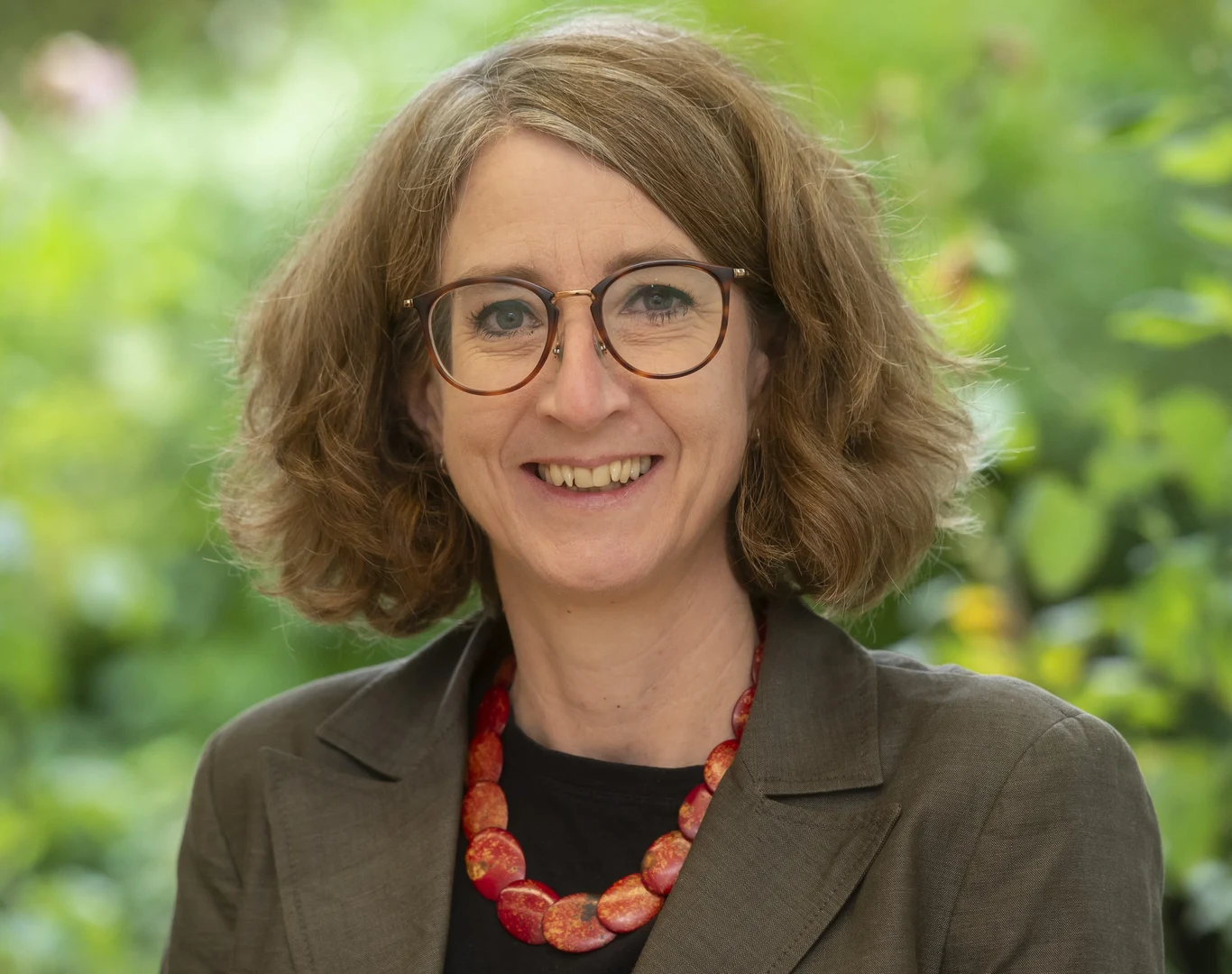

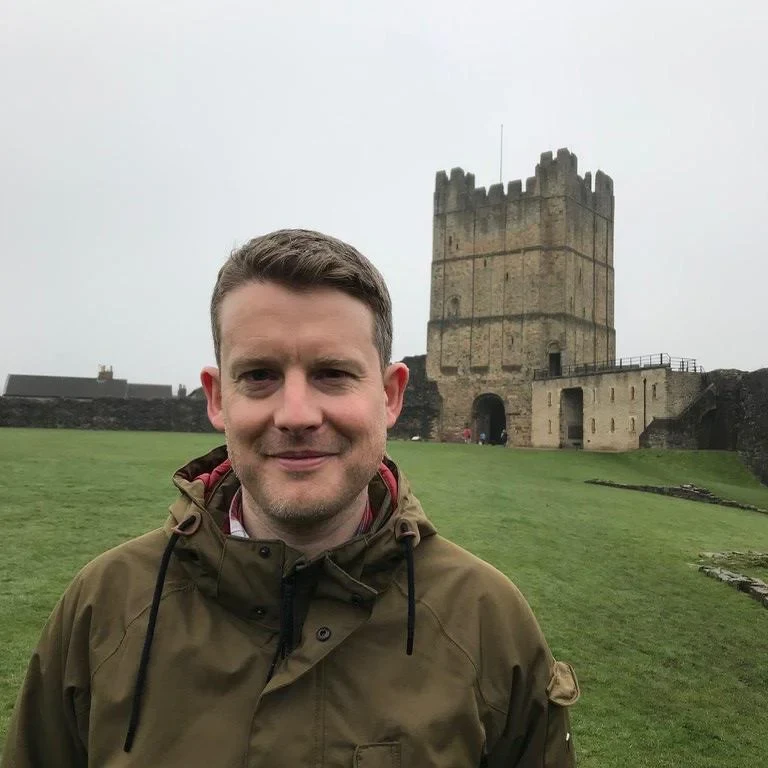
Research Assistants



News

What’s in a Name? — The Unknown Faces of History
A new project at the University of Bonn’s BCDSS Cluster of Excellence and the Department of History is studying nameless individuals in historical sources.

New Publication Co-Authored by Julia Hillner, Jamie Wood and Others on Namelessness in Late Antiquity
A new article co-authored by BCDSS Principal Investigator Prof. Julia Hillner, former BCDSS Guest Researcher Jamie Wood, and others has been published in Medieval People (Vol. 40, Iss. 1, 2026). The article examines the significance of namelessness as a historical and social phenomenon across Late Antiquity and the Early Middle Ages, with direct relevance to the study of slavery and dependency.

ERC Project Success: Jamie Wood Secures ERC Advanced Grant Collaboration
Jamie Wood has recently had a grant success for his part in the ERC Advanced Grant project, "Anonymous agency in the making of Christian Iberia 589-1100", led by Professor Emma Hornby at the University of Bristol. Jamie is one of the co-investigators of the project, which will run from late 2026 to 2031 and will be leading a work package on the dissemination of knowledge by anonymous individuals and groups, as well as producing several articles and contributing to a co-authored volume.
Events

VolkswagenStiftung Welcomes "Open Up" Grantees at Hannover Kick-Off Event
On 4–5 March 2026, grantees of the VolkswagenStiftung’s "Open Up" initiative gathered at the Herrenhausen Palace Conference Centre in Hannover to launch their collaborative research projects.

"Namelessness in History" Workshop to Explore New Digital and Analogue Frontiers
From 17–18 September 2026, the Bonn Center for Dependency and Slavery Studies will host the workshop "Namelessness in History: Methodological Challenges and Transdisciplinary Perspectives."
For details on panel schedules and speakers, please refer to the workshop programme (PDF).

Ethics and Epistemology
The upcoming workshop, focusing on the intersection of ethics and epistemology, will be held on March 15, 2027.
Further details will be shared in the coming months

Book Sprint
We are pleased to announce the final workshop of our project, which will take place in Oxford from September 1–3, 2027.
This concluding event will run as a dedicated "Book-Sprint," bringing our team together to collaborate intensively and finalize our work.
Publications by Project Members on "Namelessness"
- Hillner, Julia, Máirín MacCarron, and Ulriika Vihervalli. ‘The Politics of Female Namelessness between Late Antiquity and the Early Middle Ages, circa 300 to 750’. Journal of Late Antiquity 15, no. 2 (2022): 367–401.
- Wood, Jamie, Hope Williard, Máirín MacCarron, Julia Hillner, and James Burns. ‘Problems and Possibilities of Namelessness in Late Antiquity and the Early Middle Ages’. Medieval People 40, no. 1 (2026). https://scholarworks.wmich.edu/medpros/vol40/iss1/6.
Partners
- ERC Advanced Grant: "Anonymous agency in the making of Christian Iberia 589-1100"
- Connecting Late Antiquities (Departmental Partner Project)
- Lambert Heller, Open Science Lab, TIB – Leibniz Information Centre for Science and Technology, https://www.biblionik.org/en/
Funding
The project has secured €370,000 in funding over 18 months from the Volkswagen Foundation as part of its “Open Up – New Research Spaces for the Humanities and Cultural Studies” program.

Contact

Julia Hillner
Heinrich-von-Kleist-Straße 22–28
53113 Bonn
Our PLs
