The project "In God we Trust? Support Networks of Unmarried Women in Colonial Cape Town" at Bonn University focuses on the visibility of unmarried women in early colonial Cape Town, addressing their complex social realities within a society heavily influenced by the Dutch Reformed Church. It is part of the joint project "Economies of Trust? A New Digital Infrastructure on the Urban Poor in the Cape Colony," funded by the Gerda Henkel Stiftung.
Dr. Eva Marie Lehner, Julia Schmidt
In God we Trust? Support Networks of Unmarried Women in Colonial Cape Town
Unmarried women, whether they were free, manumitted, or enslaved, occupied a precarious social position in 18th century colonial Cape Town due to their lack of a male guardian. Premarital or extramarital sexual relations posed a threat to their honor. Enslaved women faced an additional layer of exclusion, as they were forbidden from marrying.
While existing research highlights the significant role of the Dutch Reformed Church in the settler society of colonial Cape Town, a gap remains in our understanding of how practices of inclusion and exclusion within the church affected marginalized groups. The project at Bonn University addresses this gap by centering the experiences of unmarried women who petitioned the church council for permission to baptize children.
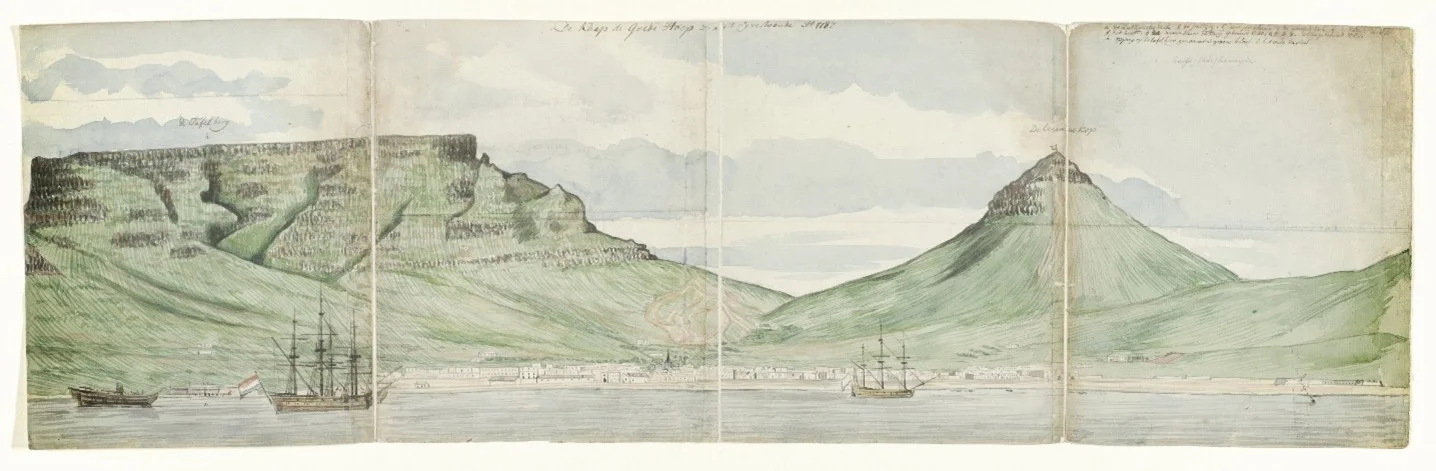
From 1781, parents of illegitimate children had to appear in person before the full body of the Church council in Cape Town to request permission for baptism. The set of sources that was created by this practice expose the control that the church sought to exert over unmarried and especially enslaved women’s bodies and reproduction. These sources also offer a rare opportunity to gain insights into the system from the point of view of the women themselves.
Through analyzing petitions that unmarried women made to the church council, together with baptismal registers and membership lists, the project uncovers the social networks of these women. Taking an intersectional approach, the project shows how different intersections of gender, religious belonging and legal status determined the social position of an unmarried woman in the Cape colony. In centering the experiences of unmarried women, the project highlights the support networks the women established, the strategies they employed to position themselves within different communities, and how they navigated the social dynamics and power structures of the colonial context.
Part of:
Economies of Trust? A New Digital Infrastructure on the Urban Poor in the Cape Colony
Who could be trusted in a profoundly unequal, cosmopolitan society? The project "Economies of Trust? A New Digital Infrastructure on the Urban Poor in the Cape Colony" looks beyond colonial paper realities of the Dutch colonial empire to reconstruct bottom-up social networks in 18th century Cape Town and how these were performed vis-a-vis formal institutions.
People
PIs:
Dr. Eva Marie Lehner (University Bonn)
Dr. Dries Lyna (Radboud Unversity Nijmegen)
Dr. Wouter Ryckbosch (Ghent University)
Postdoctoral Researchers:
Julia Schmidt (Project: Support Networks of Unmarried Women)
Yannis Skalli-Housseini (Project: Revisiting Credit Networks)
Paul Phillip van der Linde (Project: Constructing Legal Credibility)
News
10 October 2025, Press release University Bonn: Soziale Netzwerke in der Kolonialzeit