In this chapter, Sinah Kloß analyze how the Madras tradition in Guyana navigates asymmetrical dependencies by using ethnographic documentaries to contest its historical marginalization and stigmatization by mainstream religious and colonial authorities. Practitioners strategically utilize the “foreign gaze” of researchers and filmmakers to claim respectability and “outside status,” which allows them to negotiate their subalternized position within the broader social hierarchy. This process of documentation facilitates the guruization of spiritual leaders, enabling them to challenge the dominance of orthodox Brahman pandits while simultaneously establishing new internal power dynamics and leadership claims within the tradition itself.
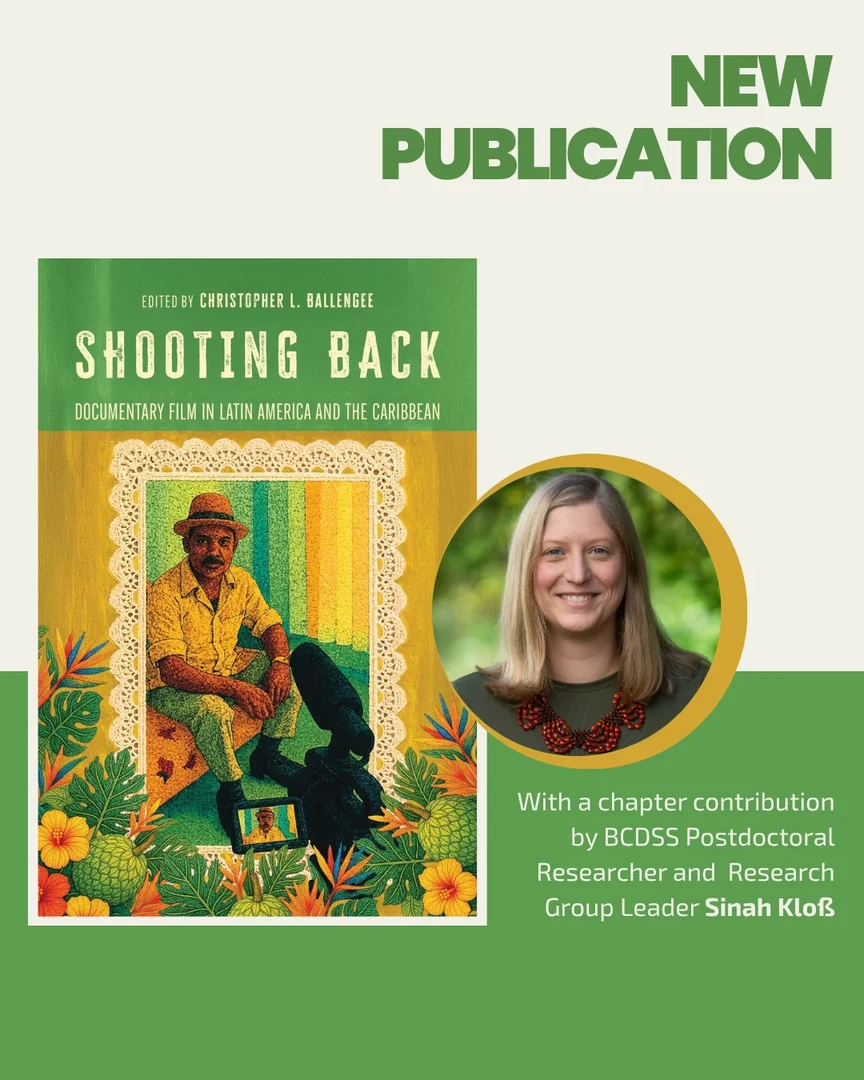
New Publication by Sinah Kloß! "Filming Mother: Performing Respectability through Ethnographic Documentaries on Guyanese Kali-Mai Puja"
"Filming Mother: Performing Respectability through Ethnographic Documentaries on Guyanese Kali-Mai Puja"
Shooting Back: Documentary Film in Latin America and the Caribbean brings much-needed critical attention to the documentary and ethnographic filmmaking traditions of Latin America and the Caribbean, regions where fiction cinema has long dominated scholarly discourse. This wide-ranging collection explores the diverse social, cultural, political, and institutional forces that shape nonfiction filmmaking across the hemisphere.
Featuring essays from leading and emerging scholars, the volume examines how documentary and ethnographic films have responded to and influenced political movements, national identity, and cultural memory. Contributors investigate how these films affirm or contest colonial legacies, challenge systems of power and inequality, and reflect ongoing struggles around migration, diaspora, and decolonial thought.
In addition to thematic explorations, Shooting Back delves into the practical realities of filmmaking in the region, from production and distribution to the roles played by educational and governmental institutions. The collection also considers the impact of film festivals, evolving technologies, and transnational networks, offering comparative analyses of key works and filmmakers.
As both a scholarly intervention and an invitation for further research, Shooting Back situates Latin American and Caribbean documentary within broader conversations about global cinema, postcolonial critique, and Global South studies. This volume is an essential resource for film scholars, Latin Americanists, and anyone interested in the political and aesthetic power of nonfiction film.
New Publication Sinah .png
© BCDSS
Download all images in original size
The impression in connection with the service is free, while the image specified author is mentioned.